
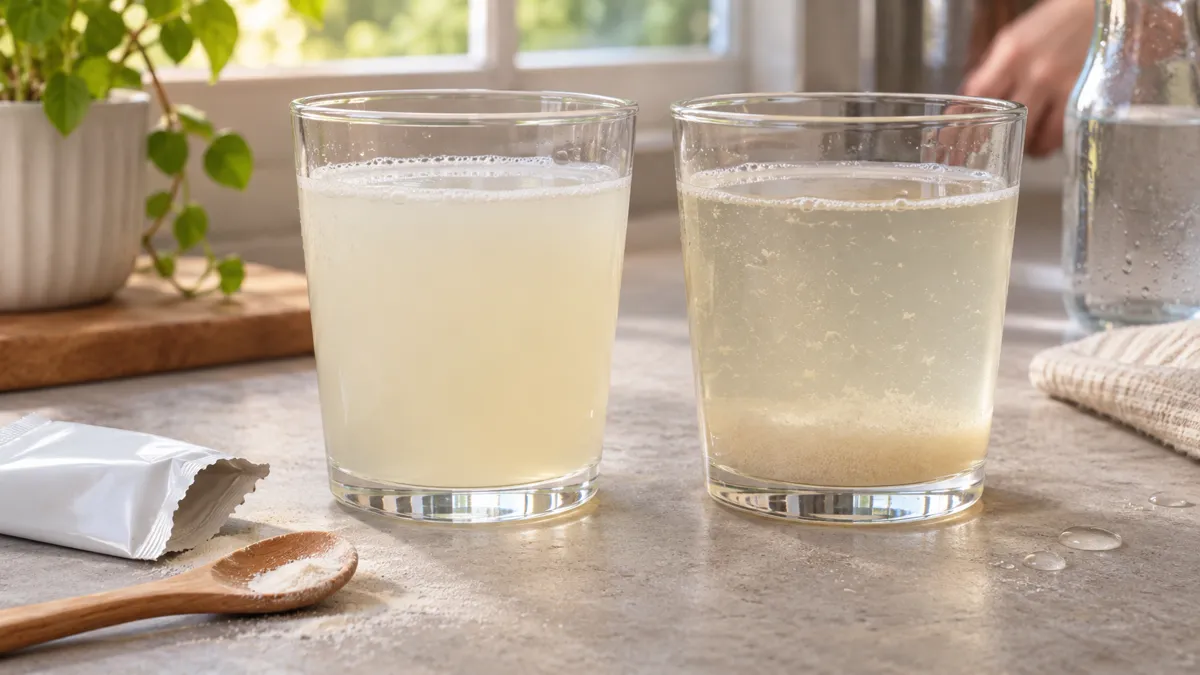

A freshly mixed sample is only an early indication of how a finished beverage will perform. When developing a drink with tuna collagen peptides, the formulation team needs to assess the full recipe through processing, packaging and storage. A sample that looks acceptable on the bench may still need considerable work before it is ready for production.
Table of Contents
Define the drink before judging the powder
Decide what the customer should experience when opening and drinking the product. A clear fruit drink, an opaque smoothie and a concentrated shot have different expectations for appearance and texture. Specify the intended serving size and ingredient amount before comparing samples. Otherwise, one powder may appear easier to use simply because it was tested at a lower concentration.
Hydrolysis breaks collagen into smaller peptide chains, but the description collagen peptides does not establish how a powder will perform in a particular drink. Obtain information about the grade’s peptide size distribution and solubility, then test the actual recipe. Agree what cloudiness or settling would be acceptable and whether any sediment can be dispersed using preparation instructions that are reasonable for the customer.
Use controlled trials to find the cause of a change
Record the ingredient grade and batch, water source, mixing conditions and full recipe for each trial. These details help distinguish a repeatable result from a sample that happened to work once. Include the beverage base without added collagen as a comparison where appropriate. That can help establish whether an observed flavour or colour is associated with the new ingredient or already present elsewhere in the recipe.
When a problem appears, change one relevant variable at a time where practical. For example, investigate the mixing sequence before simultaneously changing the flavour, acidity and ingredient concentration. A food technologist can design a more efficient trial programme when several factors need to be assessed together. The aim is to understand which change improved the product so the result can be reproduced.
Repeat the assessment after realistic processing and filling
A laboratory mixer and a production vessel do not necessarily give a formula the same treatment. Arrange a suitable pilot run using the intended process, including any heating, cooling and holding stages. Reassess the drink after filling rather than approving it solely from a mixing vessel. Record what happened so differences between the bench sample and pilot batch can be investigated.
Use the proposed packaging in development as early as practical. A convenient laboratory container does not answer how the chosen bottle, closure or sachet will perform through the planned distribution route. Ask the packaging and food safety teams which tests are needed. If the product will be refrigerated, make sure the development plan reflects that intended supply chain and use.
Follow the product beyond its first tasting
Set aside representative samples for assessment over time under the agreed storage conditions. Check relevant physical and sensory changes alongside the laboratory testing needed to evaluate safety. An acceptable appearance cannot establish microbiological safety, and an initially pleasant flavour does not confirm that quality will remain acceptable until the proposed expiry date. These are separate questions for the validation programme.
For a powder that consumers mix themselves, test the actual preparation instructions with the intended water volume and temperature. Equipment available in a factory may disperse the powder more effectively than a spoon or household shaker. If the instructions require unusually long mixing or an impractical routine, revisit the formulation or format before treating the product as finished.
Keep the formula, process and pack details attached to the results. A later change may need further assessment rather than inheriting the original expiry date. The testing programme should provide a defensible basis for setting and checking the finished product’s shelf life, with qualified technical input appropriate to the drink and its distribution conditions.
Successful development means being able to reproduce an acceptable product throughout its intended life. Clear criteria and controlled trials help explain why a sample changes and what needs adjusting. That understanding is more useful at launch than an impressive first tasting that the production team cannot consistently repeat.
